Septic & Mound Services

Septic Filter Cleaning

A clean effluent filter protects your septic system and drainfield. Your septic system’s effluent filter keeps solids from reaching the drainfield. This filter can clog, causing tank water levels to rise and increasing the risk of slow drains, sewage backups and costly repairs.

Regular cleaning helps your septic system perform the way it should and can extend the life of your drainfield.
Why Filter Cleaning Matters

Your effluent filter is the last line of defense before wastewater reaches your drainfield.

When it gets clogged, wastewater can’t flow properly. Regular cleaning prevents backups and protects your septic system.

Safety Comes First

Septic tanks contain dangerous gases and should only be entered by trained professionals with specialized equipment. You can clean effluent filters from outside the tank. If you’re unsure how to do it safely, call Herr Septic & Sewer.

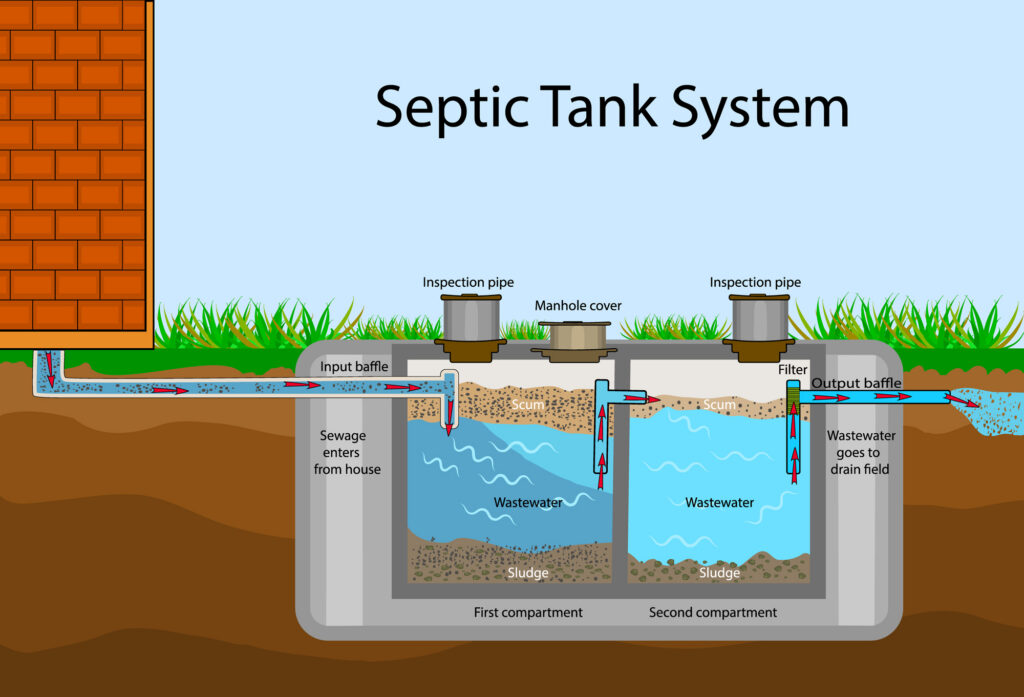
Diagram of a septic tank system showing two chambers with wastewater and sludge, input and output baffles, inspection pipes, manhole cover, and arrows indicating the flow from a house to a drain field.

What to Expect

1

We remove the access cover.
Our techs open the tank and check the water level.

2

We remove the filter.
If the water level is above the filter housing, our tech removes it slowly and allows the water level to drop before pulling it out completely.

3

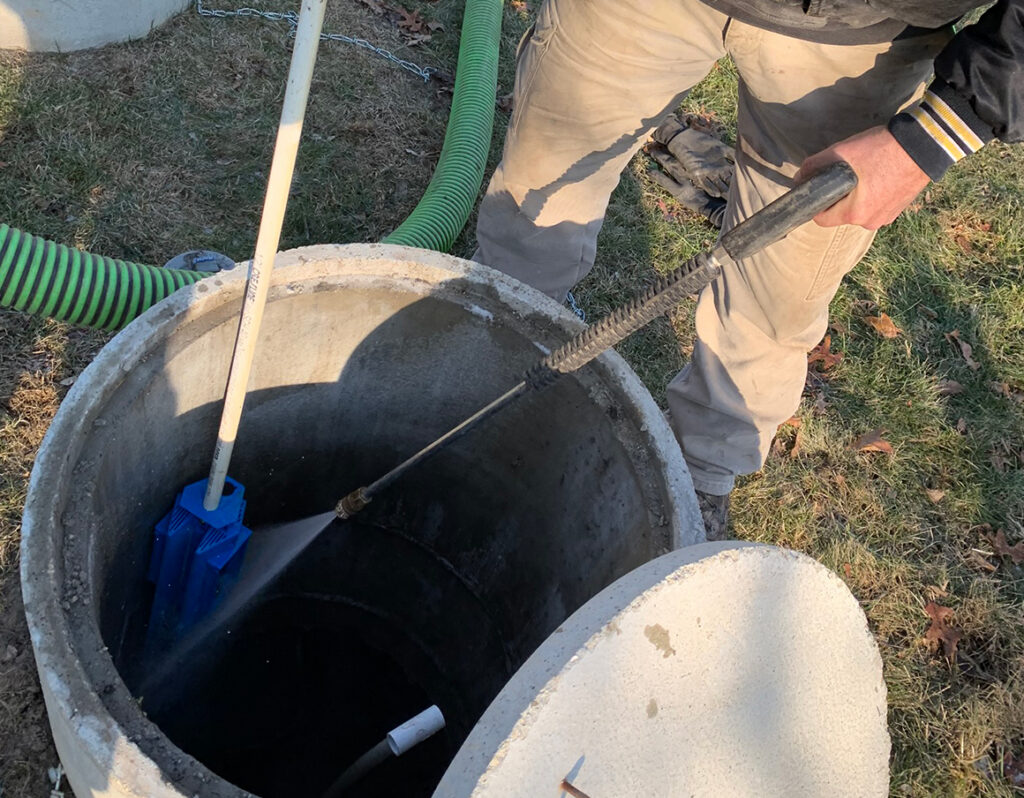
We rinse the filter.
Holding the filter over the tank lets debris wash back into the septic system.

4

We reinstall the filter.
Our techs insert the cleaned filter into its housing and replace and secure the access cover.

How Often Should You Clean the Filter?

Every septic system is different, but these guidelines are a good place to start.

  • Single-chamber septic tanks: Check the filter every 30–60 days until a cleaning schedule is established.
  • Two-compartment or two-tank systems: Check the filter at least every six months.
  • When your tank is pumped: Have the filter cleaned at the same time.

If you notice slow drains, sewage backups or water levels rising above the filter housing, it’s time to clean the filter or call a professional.

A person uses a pressure washer to clean the inside of a large concrete pipe or well outdoors. A green hose and a blue brush are also visible, along with grass and scattered leaves nearby.